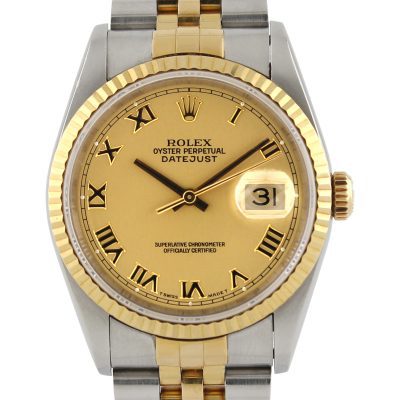
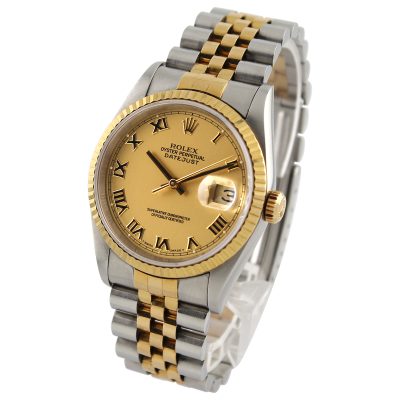
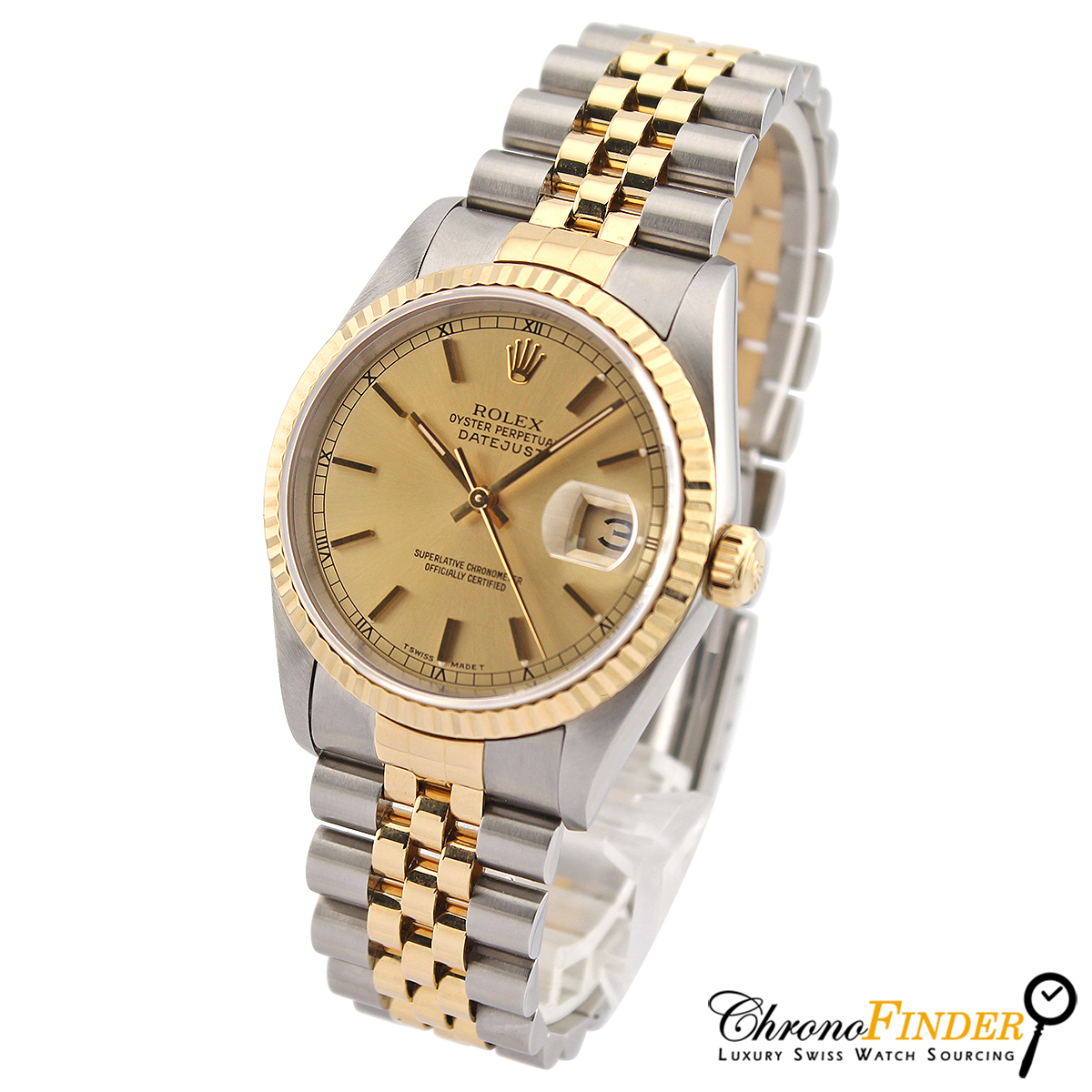
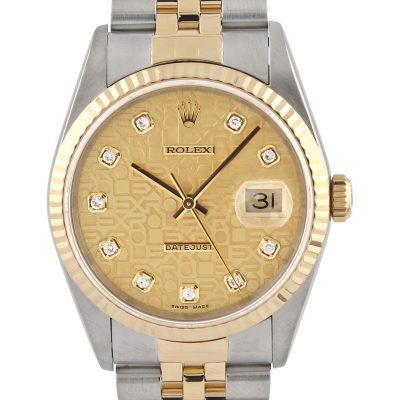
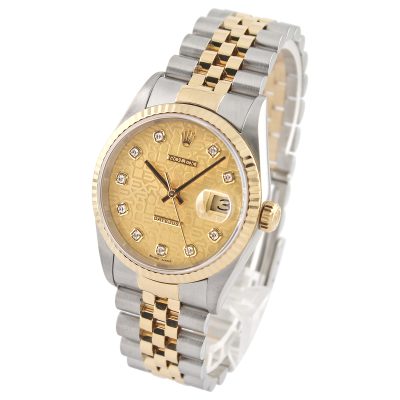
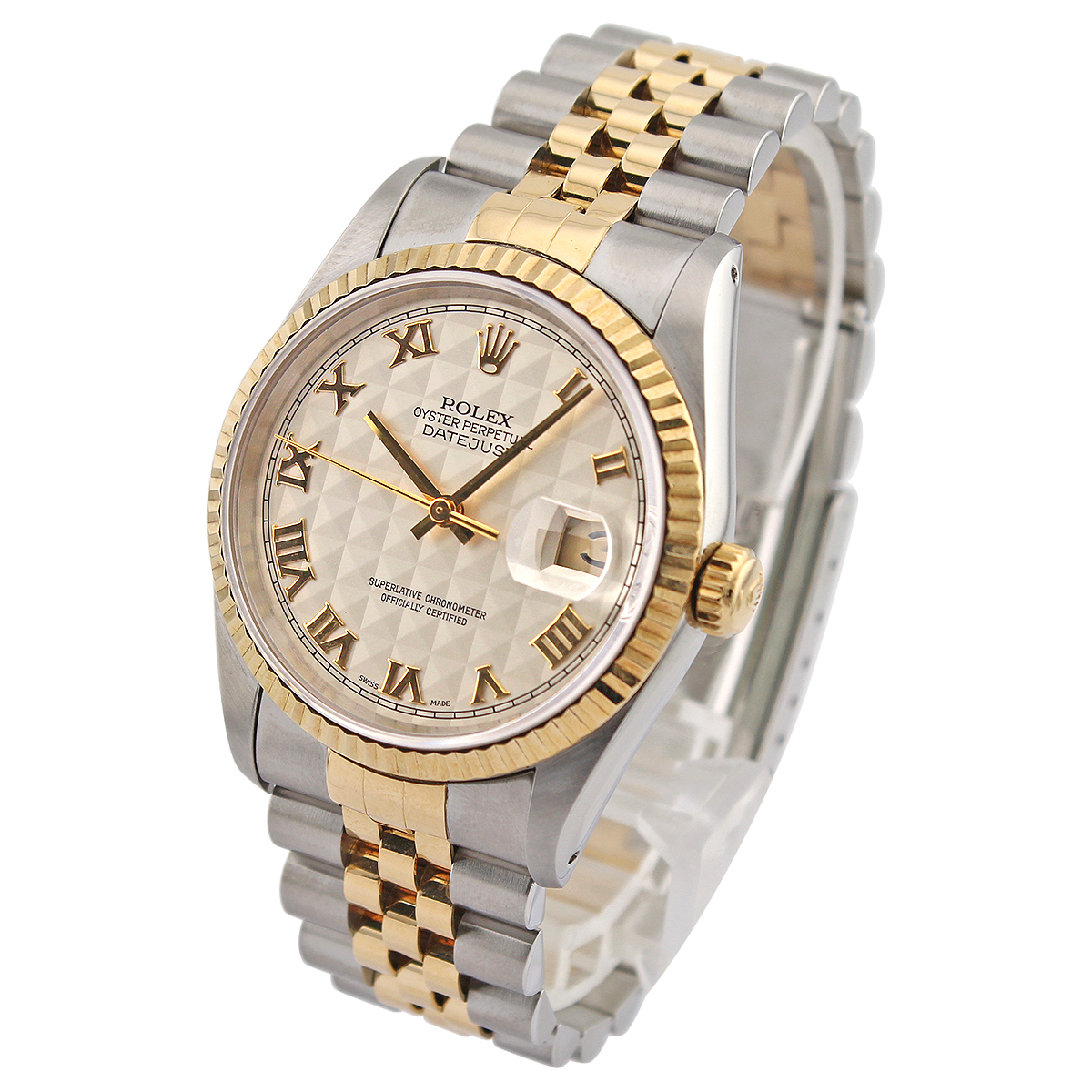
The 16233 is the two-tone variant of the Datejust 36, combining an Oystersteel case with 18ct yellow gold detailing across the fluted bezel, crown and Jubilee bracelet. It was produced from the late 1980s to around 2000, during which time it sat alongside the all-steel 16234 and full yellow gold 16238 as part of the same generation of the collection. That Rolesor combination has always occupied a particular sweet spot in the Datejust range, offering genuine gold detailing without the weight or price of an all-gold watch.
The movement inside is the Calibre 3135, and it is worth highlighting as a genuine strength of this reference. Rolex used it across the Datejust 36 throughout this era, and it remains one of the more capable movements of its generation, a bidirectional self-winding rotor, a quickset date function, and Rolex’s Parachrom balance spring in later examples.
Dial choice across the production run was also extensive. The silver baton and champagne baton are the more classic options, while champagne diamond, cream Arabic and ivory pyramid dials each bring something different to the watch. The pyramid dial in particular has developed a following among buyers who appreciate the more unusual details that emerged from this period of Rolex production.
If you are open to newer two-tone options, we recommend exploring the broader Datejust collection for current production alternatives.
What to Look for When Buying a Pre-Owned 16233
Buying a vintage Datejust well is mostly about knowing where to look and what to expect. These are watches that are now at least 25 years old, and the difference between a carefully kept example and one that has had a harder life is often visible immediately.
The Jubilee can develop stretch in the bracelet on older pieces, and on a watch of this age some looseness is common. A little movement in the links is normal, however significant play throughout the bracelet is worth factoring into your assessment of the price. The clasp is also worth checking, as the older folding Oysterclasp design can wear at the hinge over time.
On the case and bezel, look for signs of polishing. A watchmaker or jeweller will often polish a watch when it comes in for service, which over the years can gradually soften the sharp angles of the case and the ridges of the fluted bezel. It does not affect how the watch runs, but it does change how it looks, and a watch with original unpolished finishing will generally be the better buy. The dial is the other area to pay attention to, particularly on champagne and cream examples where fading or discolouration can appear with age.
The box and papers are harder to find on a watch of this vintage but worth asking about. If they are present, they can add to the overall value of the piece. If not, buying from a dealer you trust matters more here than on a current production watch. If there is a specific configuration you are looking for, get in touch and we can help track it down.
How Much Does a Rolex Datejust 16233 Cost?
The 16233 typically sits between £5,500 and £8,000 on the pre-owned market, though condition and dial choice can push prices in either direction. Diamond dial examples and complete sets with box and papers tend to attract more interest and price accordingly, while baton dial pieces in honest pre-owned condition represent some of the better value in the vintage Datejust market.
What separates a £5,500 example from one at the top of that range is usually condition rather than reference alone. A watch with original case finishing, a tight bracelet and a clean dial will always command more than a comparable piece that shows its age more obviously. The premium for a well-preserved example is generally worth it, particularly for buyers planning to wear the watch regularly.
It is also worth putting the price in context. The 16233 sits above the Lady-Datejust 69173, given the larger case and stronger movement, but well below what a current production two-tone Datejust 36 would cost. For buyers who are open to vintage and want a genuine Rolesor Datejust without the premium of a newer reference, it is a sensible place to look.